Near Busan, there’s an island called Geoje. It’s also the birthplace of two former South Korean presidents, which is a pretty remarkable claim for an island that isn’t actually that big. Two presidents from one relatively small island says something about the place, even if you’re not into politics.
Source : Geoje City
Geoje is technically an island, but it’s connected to the mainland by bridges, so getting there and around by car is easy. On the southern side of the island sits a mountain called Mangsan, and that’s what I want to introduce in this post.
Mangsan is especially stunning in summer, though honestly, it’s just as beautiful in autumn. I’ll walk you through a recommended Mangsan hiking course, how to actually get there from Seoul or Busan, a local restaurant where you can taste real Korean food after your hike, and a couple of other spots on Geoje worth checking out.
Recommended Mangsan Hiking Course (Korea Mountain Trail)
The course I’m sharing today starts at Hongpo Village Hall, goes over Mangsan’s summit, and finishes with a descent into Jeogu Village. There’s also a round-trip option that starts and ends at Hongpo, but honestly, that version is too easy and only gives you a brief view near the summit before you turn back. The Hongpo-to-Jeogu route bumps the difficulty up to easy-to-moderate, but in exchange, you get a much longer and much more varied stretch of ridge views.
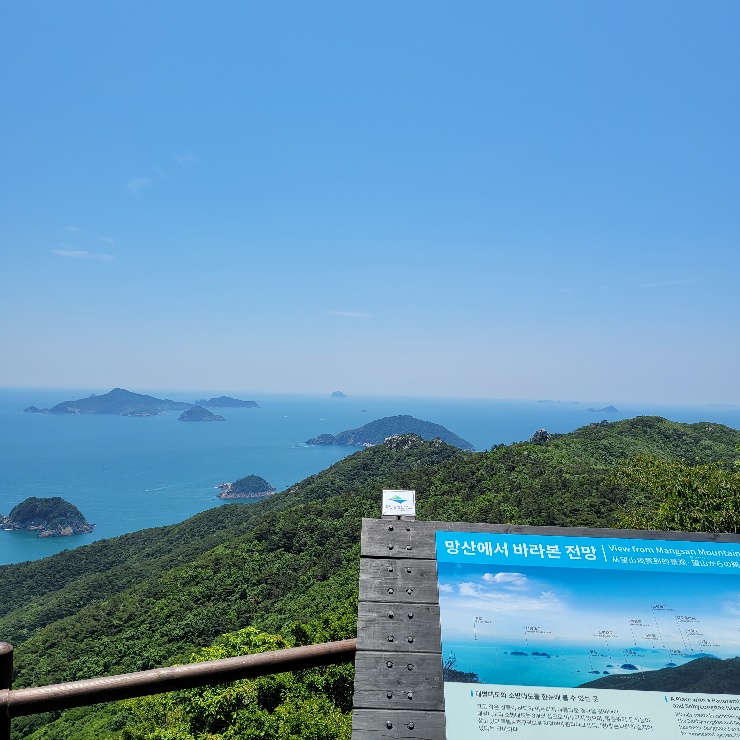
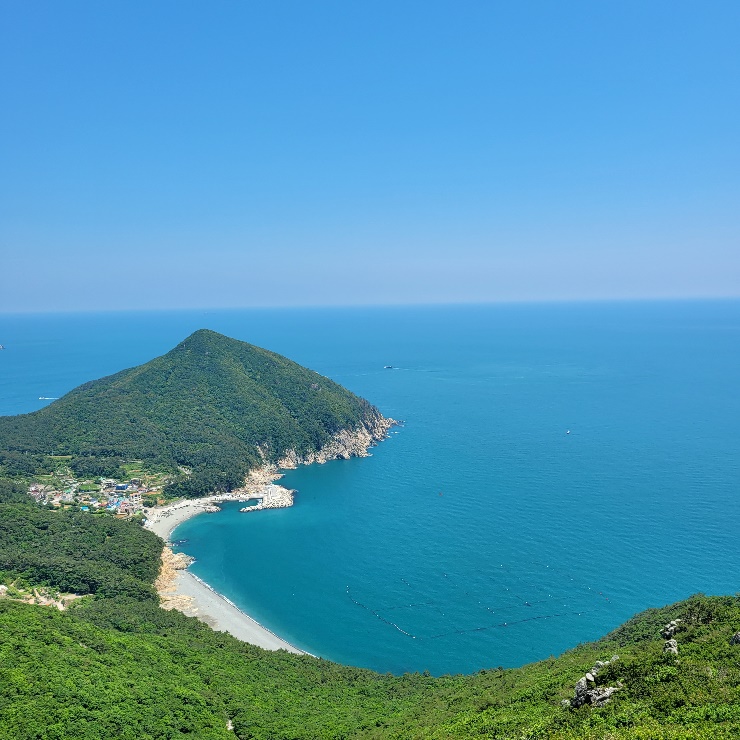
Mangsan tops out at around 397 meters, which doesn’t sound like much on paper, but stand at the summit and you’ll see islands of every size scattered across the deep blue sea, all part of Hallyeohaesang National Marine Park. On the back of the summit marker is a phrase that translates roughly to “the finest view under heaven,” and once you’re actually standing there, you’ll realize that’s not an exaggeration. As you walk the ridge from Hongpo toward Jeogu, the Hallyeo Waterway keeps you company on your right the entire way, and while I won’t go so far as to compare it directly to Positano in Italy, it’s genuinely in that league of scenery.
Source : Geoje City Tourism Source : Korea National Park Service
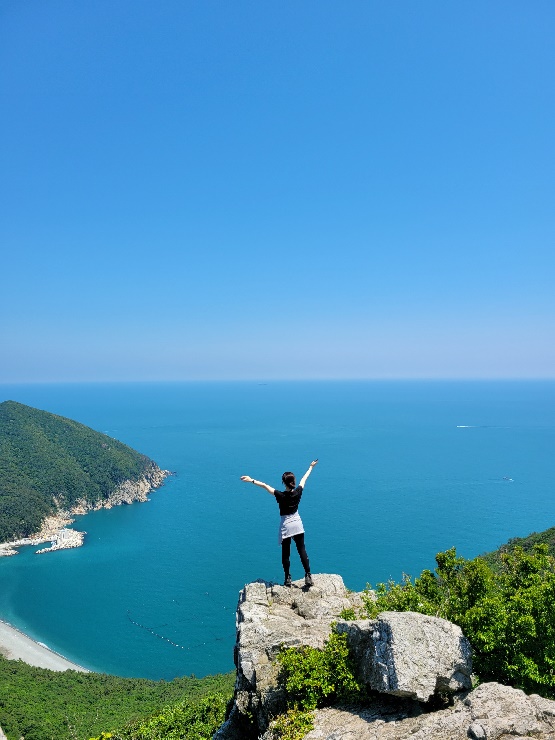
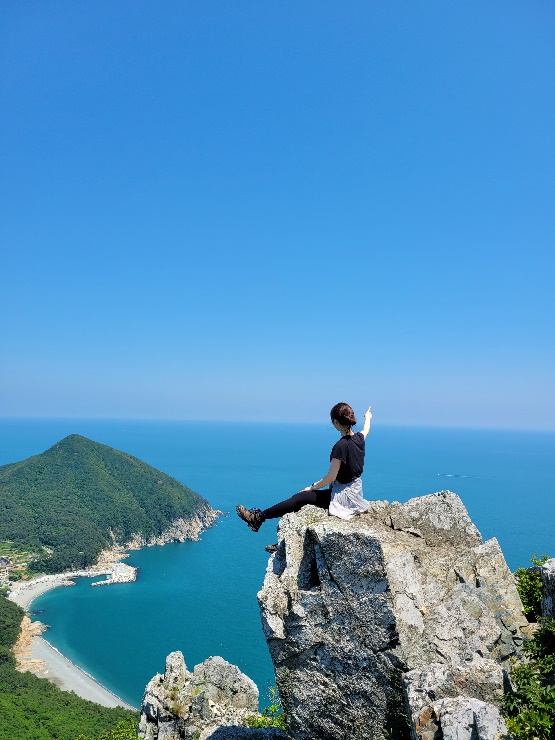
I had a memorable moment on this trail that’s stuck with me. Partway through the hike, I ran into an older gentleman, a retired Air Force officer who happened to be from the same hometown as me. He told me that since retiring, he’d hiked nearly every well-known mountain in the country. What stuck with me was what he said while we were walking the ridge together: out of every mountain he’d ever hiked across Korea, this one ranked in his personal top three. Coming from someone who’d genuinely been everywhere, that comment carried a lot of weight.
The full course runs roughly 6km, and you should budget about 3 hours and 30 minutes at a comfortable pace. That said, timing can vary depending on the season and your own hiking speed, so treat this as a general guide and give yourself some breathing room.
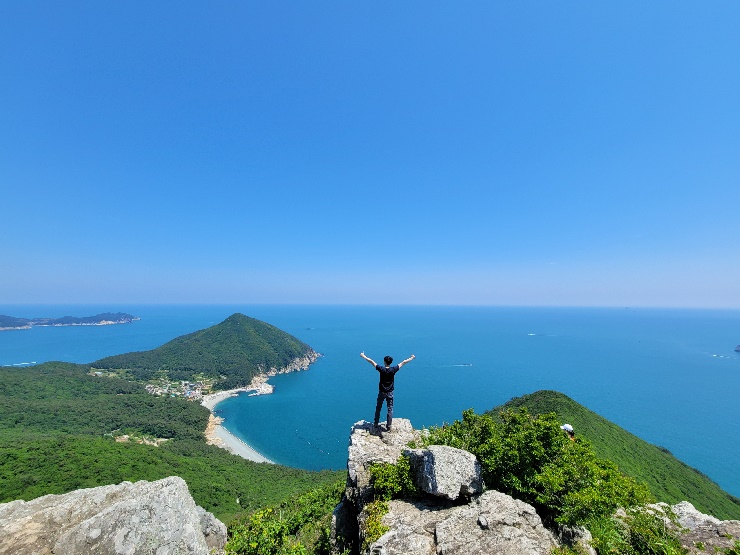
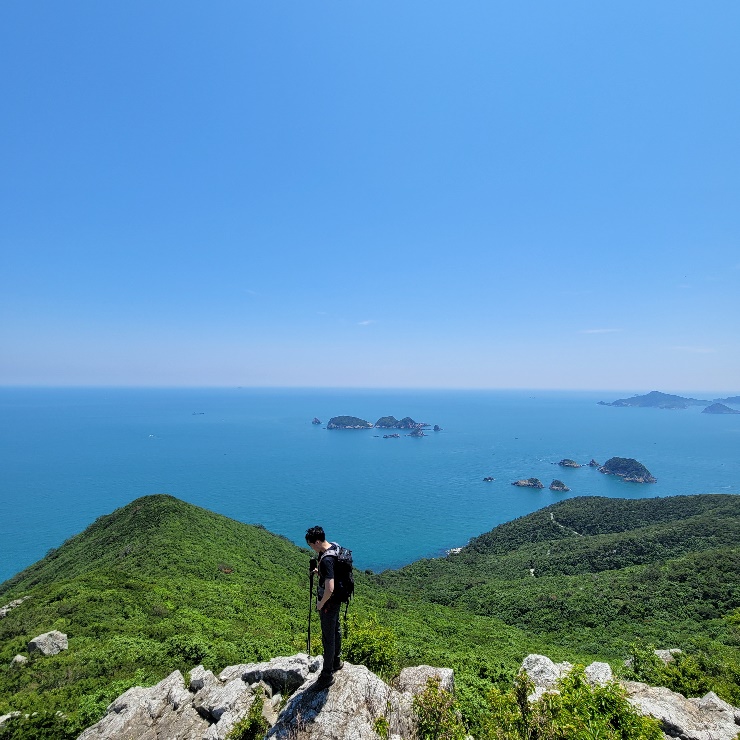
One more thing worth knowing: don’t let the views talk you into lingering too long out on the open ridge. I hiked this in the middle of an August afternoon, and at one point I genuinely felt like my head was cooking in the sun. Try to take in the scenery from under tree cover where you can. The ridge sections have essentially no shade, so you’re exposed to direct sun the whole way.
How to Get to Geoje Island
How you get to Geoje depends heavily on where you’re starting from. I’ll break this down separately for travelers coming from Seoul and travelers coming from Busan. Since Busan draws a lot of international visitors, I’ll focus especially on how accessible this is from there.
Getting to Geoje from Seoul
Geoje doesn’t have a train line, so getting there from Seoul essentially means taking an intercity or express bus. From Seoul Nambu Terminal, you can catch a bus heading toward Geoje (Gohyeon), and the ride takes roughly 4 hours 30 minutes to 5 hours. Intercity bus schedules in Korea shift fairly often depending on the season and demand, so it’s worth double-checking the real-time timetable on a booking app before you head out.
If you’d rather shave off some travel time, another option is taking the KTX high-speed train to Busan first, then transferring to a bus (covered below). The KTX ride from Seoul to Busan takes about 3 hours, and once you add the connecting bus to Geoje, the total isn’t dramatically longer than the direct bus, while giving you the bonus of a short stop in Busan along the way.
Getting to Geoje from Busan
Getting to Geoje from Busan is much simpler and faster than from Seoul. From Busan’s Sasang Intercity Bus Terminal, you can catch a bus toward Geoje (Gohyeon) that crosses the Geoga Bridge and gets you there in roughly one to one and a half hours. Buses run frequently enough that you generally don’t need to book ahead.
Once you arrive in Gohyeon or Jangseungpo, you’ll still need to get to Hongpo Village, the starting point for the Mangsan hike. Public transit out there runs infrequently, so I’d recommend a taxi or a rental car for this last leg. If you’re visiting from abroad, renting a car is actually a great option in general, since Geoje itself is known as one of Korea’s best coastal driving routes, letting you combine the hike with some scenic driving.
A Local Restaurant Worth the Trip After Your Hike: Boulmul-seom
If you descend into Jeogu Village, make sure to stop by a restaurant called Boulmul-seom (보물섬 식당). The address is 14 Dapo 4-gil, Nambu-myeon, Geoje-si, Gyeongsangnam-do. What makes this place special is that the owner, a working fisherman, goes out on his boat every morning before dawn and serves whatever he catches that day, either as mulhoe (a cold, spicy raw fish soup) or as grilled fish. On top of that, every single side dish on the table is grown by his wife in the garden behind the restaurant, which means everything on your table, from the fish to the vegetables, is genuinely local and fresh.
Both the mulhoe and the grilled fish are excellent, but after a hike, the tangy, refreshing bowl of mulhoe in particular hits the spot. This isn’t a restaurant built for tourists. It feels like you’re being handed the exact meal locals on Geoje actually eat, and I’d call it an essential stop to pair with your hike.
Other Places Worth Visiting on Geoje
To round out your day around the Mangsan hike, I’d recommend Mongdol Beach and Wind Hill. Mongdol Beach is known for the distinctive sound its smooth pebbles make as the waves roll over them, which is a completely different experience from a typical sandy beach. Wind Hill is famous for its wide, green hillside overlooking the sea, and it’s a favorite spot for photos. If you start your day with the Mangsan hike, spending the afternoon covering these two spots makes for a solid combination.
Source : Ministry of Environment
Recommended Reading
Korea Mountain Hiking : Bukhansan Course from Jeongneung to Baegundae Peak
Best Korea Mountain for Fall Foliage : Sobaeksan Hiking Course and Local Food Guide