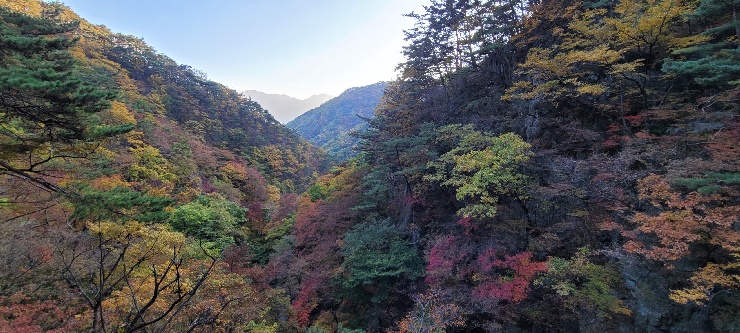
Korea is a country with four distinct seasons, which means there’s seasonal food and seasonal scenery to match each one. One of the best examples is the autumn foliage season, running from late October into early November. Since about 70 percent of the country is mountainous, a huge number of people head out to hike during this window, combining leaf-peeping with exercise.
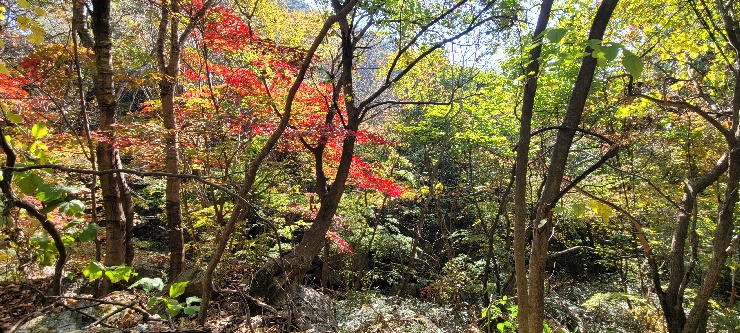
The Korea mountain I want to introduce today is Sobaeksan, which straddles Yeongju in North Gyeongsang Province and Danyang in North Chungcheong Province. Sobaeksan is managed as a national park, so its trails are extremely well maintained. Time your visit right and you’ll catch the fall colors along with striking silver grass fields near the summit ridge. In May, the mountain puts on a different show, with royal azaleas blooming along the ridge in full color.
Source : Korea National Park Service
In this post, I’ll walk you through a recommended Sobaeksan hiking course to enjoy the upcoming foliage season, plus a local market where you can taste some genuine Korean flavor after your hike. Make some great memories in Korea.
Recommended Sobaeksan Hiking Course : The Eouigok Trail Support Center Route
The course I’m introducing today starts at Eouigok Trail Support Center and heads straight up to Birobong Peak (1,439m), Sobaeksan’s summit. From there, the trail continues through Eouigok Junction, on to Gukmangbong Peak, Sangwolbong Peak, and Neujeunmaekijae Pass, before looping back to Eouigok Trail Support Center. It’s a round-trip course that starts and ends at the same point, so if you have a car, this is about as convenient as a Korea mountain hike gets.
If you’re relying on public transit, you can call a taxi or take a local village bus after coming down. The village bus is the cheaper option, but the schedule runs infrequently and the route information is mostly in Korean, so it’s worth knowing in advance that this option can be a bit tricky for foreign travelers.
Source : Korea National Park Service
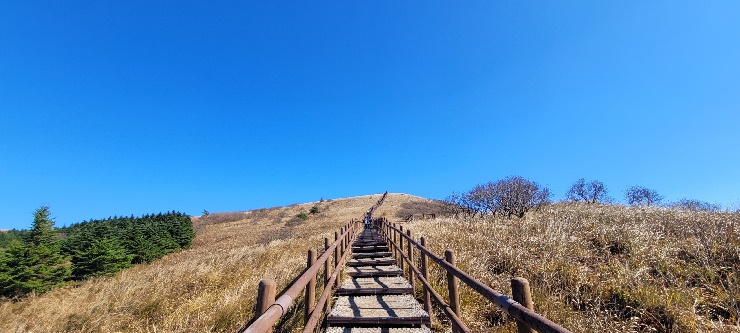
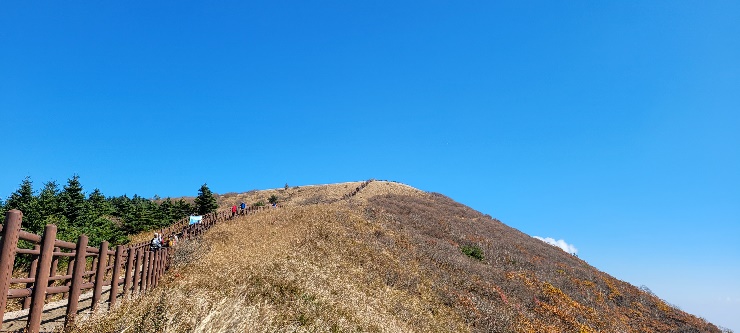
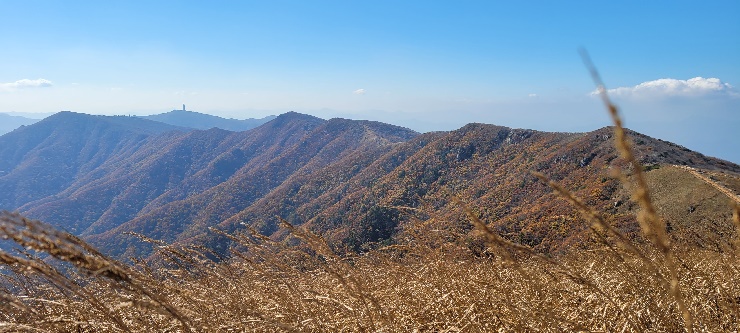
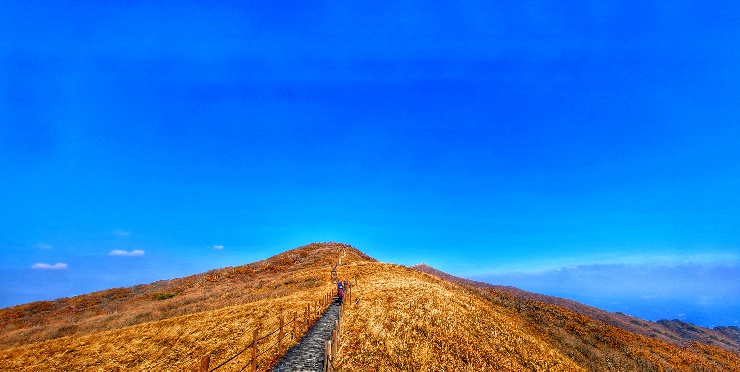
The most memorable stretch of this course is the main ridge connecting Birobong to Gukmangbong. This ridge is genuinely considered one of the most scenic stretches on any Korea mountain, with an open sky above and endless fields of silver grass and reeds swaying along the trail. In autumn especially, the fall colors and silver grass combine into a view that’s hard to match, so if this is your first time on Sobaeksan, this section is one you really shouldn’t skip.
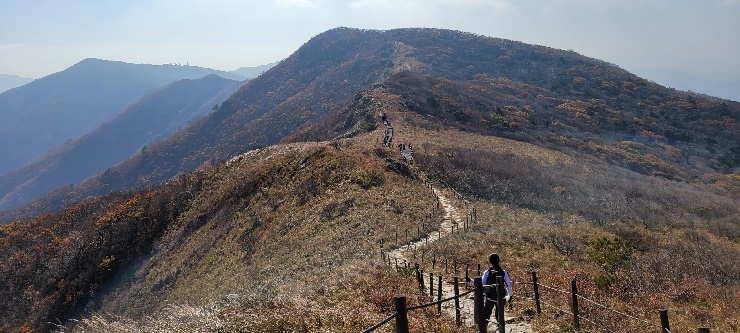
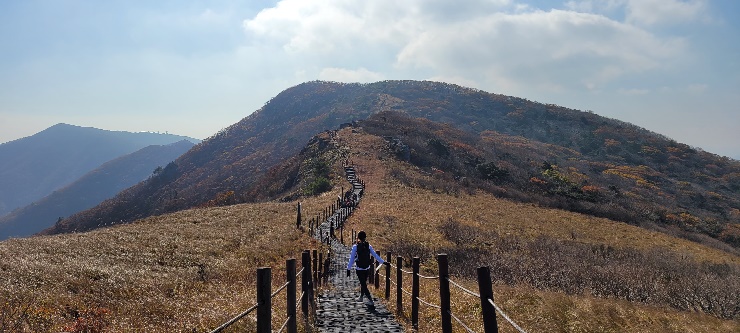
As for difficulty, this course isn’t particularly demanding. Thanks to the national park’s well-maintained trails, there aren’t many dangerous rocky sections, and most of the route follows gentle ridge walking, so even hikers without much experience can complete it without too much trouble. That said, since it’s a round-trip course, the total distance adds up, so bring plenty of water and snacks and give yourself a relaxed schedule for the hike.
Getting from Seoul to Sobaeksan’s Eouigok Trail Support Center
There are three main ways to reach Eouigok Trail Support Center from Seoul. Pick whichever fits your situation best.
Driving
The most convenient option is simply driving. From Seoul, you can reach the area in roughly two and a half hours via the Jungang Expressway, and there’s parking available near Eouigok Trail Support Center, which pairs perfectly with this round-trip course. The biggest advantage is that once you finish hiking, you can head straight back to your car and move on to your next destination.
Train, Then Bus
If you’re using public transit, one option is taking the train from Seoul Station to Danyang Station, then transferring to a bus heading toward Eouigok. Since you’re only paying for train and bus fares, this is the cheapest of the three options. That said, the bus schedule runs on a wide interval, so it’s worth checking the timetable in advance, and since bus stop names and announcements are mostly in Korean, foreign travelers should have a translation app ready.
Source : Korail
Train, Then Taxi
If coordinating your timing around a limited bus schedule feels like too much hassle, you can also take a taxi directly from Danyang Station to Eouigok Trail Support Center. The distance is roughly 20km, and the fare is likely to fall somewhere between 20,000 and 30,000 won, though the exact amount will vary with traffic conditions on the day. I’d recommend checking an estimated fare in advance through a taxi-calling app like Kakao T. Not having to worry about catching a specific bus is a real advantage, and if you’re traveling with a group, splitting a taxi fare isn’t a bad option either.
A Traditional Korean Market Worth Visiting After Your Hike : Gugyeong Market
Once you’ve finished hiking Sobaeksan, I’d strongly recommend stopping by Gugyeong Market in Danyang. This traditional market is famous for its huge range of dishes built around Danyang’s signature local ingredient: garlic. From garlic fried chicken to garlic sundae (Korean blood sausage) to garlic bread, many visitors are surprised at just how many different ways garlic can show up on a menu here.
Source : Korea Tourism Organization
If you’re worried about the strong smell garlic can have, you really don’t need to be. The garlic dishes at Gugyeong Market tend to carry a subtle, mellow flavor rather than an overpowering one, so even people who don’t usually go out of their way for garlic tend to enjoy it here. On top of that, garlic is naturally very rich in vitamin B1, which is known to help with fatigue recovery and energy metabolism. It’s hard to think of a food better suited to a body that’s tired from a day of hiking.
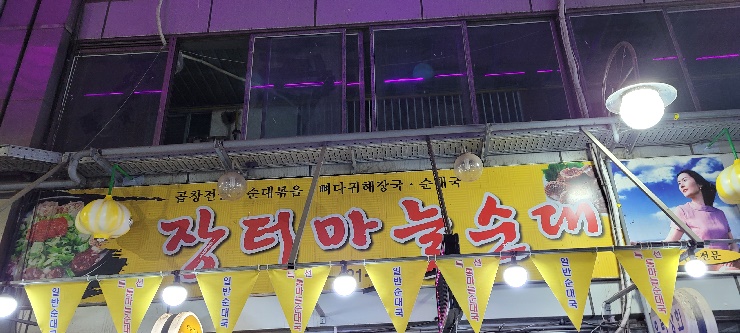
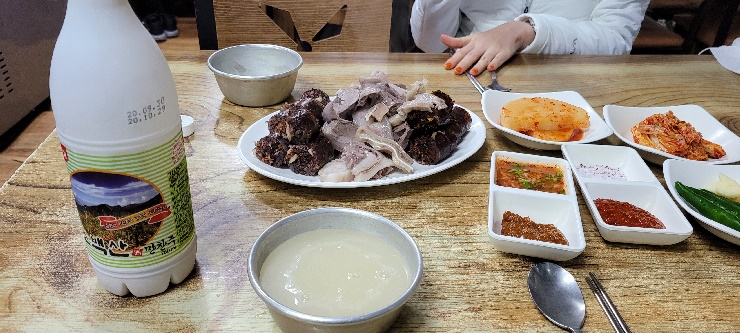
Inside Gugyeong Market, the place I’d personally recommend is Jangteo Maneul Sundae. After coming down the mountain, order a sundae platter along with a bowl of makgeolli. The combination of chewy sundae and cold, refreshing makgeolli is, I can confidently say, exactly the kind of genuine local Korean flavor that’s hard to find at more touristy spots.
Recommended Reading
Korea Mountain Hiking : Bukhansan Course from Jeongneung to Baegundae Peak
Korea Mountain Hiking Guide : Taebaeksan’s Yuilsa Course
Korea Hiking Guide : Wolchulsan, Jeonnam Yeongam’s Sunrise Hotspot
Korea Mountain Hiking Guide : Geoje Mangsan